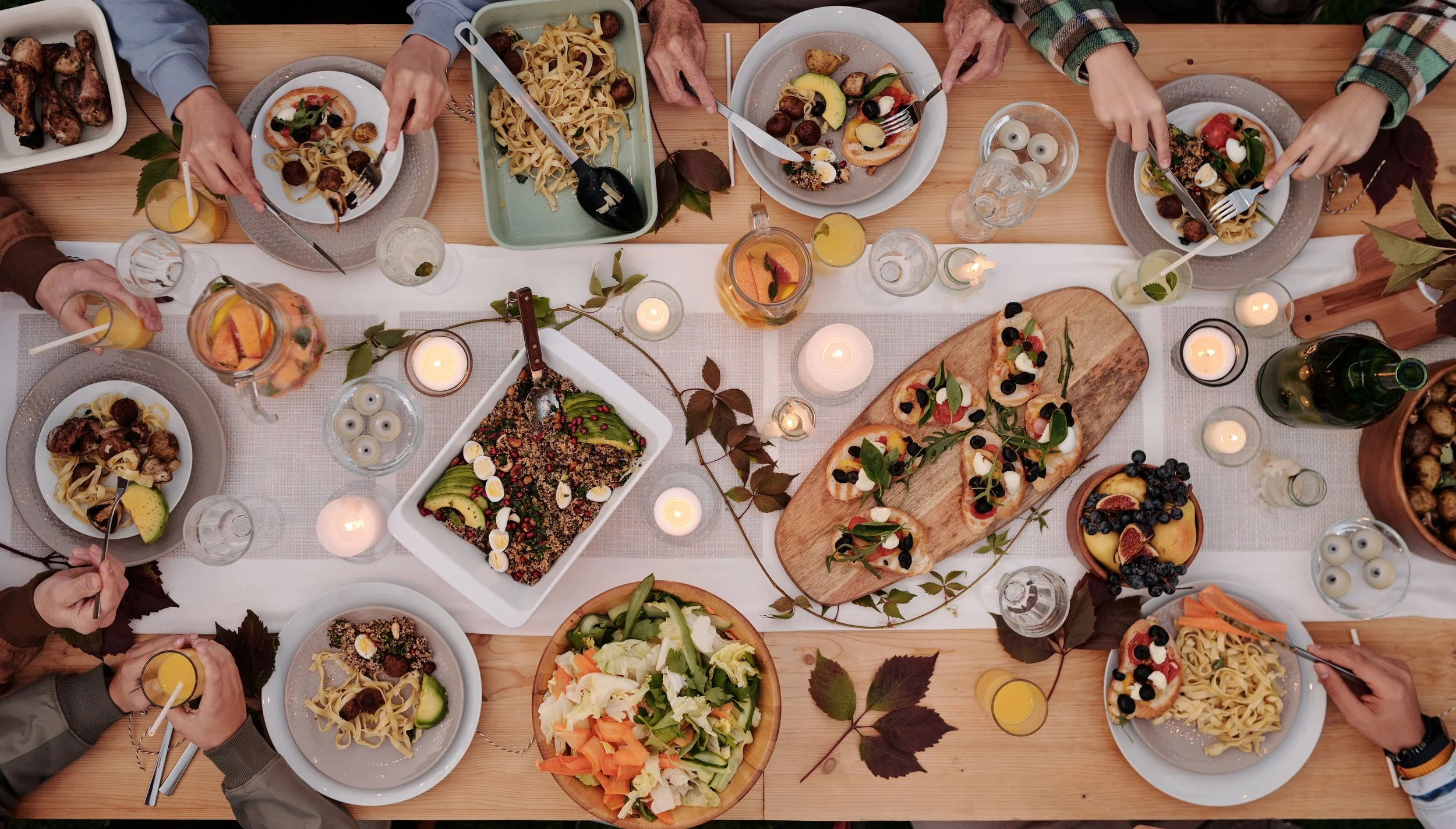
Why Holiday Eating Feels Different
The holidays are here! Time for family, friends, traditions, and, of course, plenty of food.
But somewhere between Thanksgiving dinner, holiday parties, and the endless trays of cookies, our usual eating habits can get a little… complicated.
We’re off from work, sleeping later, eating at different times, and surrounded by foods we don’t typically have around throughout the year.
And while we’re trying to enjoy the festivities, there’s often that little voice reminding us to “be good” and not undo all the progress we’ve made.
Sound familiar?
Here’s what I want you to remember: Holiday eating doesn’t have to look exactly like your usual routine for you to continue supporting your health.
Food is more than just nourishment. It’s part of how we celebrate, connect with loved ones, and carry on traditions.
The goal isn’t to navigate the holidays perfectly. It’s to understand what influences your eating habits and find realistic ways to enjoy the season without unnecessary guilt.
The Good Intentions Trap
Have you ever skipped breakfast or lunch because you knew you were going to have a big holiday dinner?
At first, it might seem like a smart strategy. If you’re planning to eat more later, why not save those calories for the big meal?
But sometimes, our best intentions are the very things that make holiday eating more challenging.
The problem is that arriving at a holiday gathering overly hungry can make it harder to be mindful of your food choices and portions. When we’re extremely hungry, we may eat more quickly, take larger portions, or continue eating past the point of comfortable fullness.
And that’s often when the guilt starts.
You find yourself thinking, “I shouldn’t have eaten so much,” or “I’ve already blown my nutrition goals for the day.”
But holiday eating challenges aren’t limited to the big family dinner.
Sometimes, it’s simply being out of your usual routine.
You’re off from work, sleeping later, running errands, shopping, or spending the afternoon doing something fun with the family. Your usual meal schedule goes out the window, and the foods you typically keep available at home may not be top of mind.
Before you know it, you’ve been out for hours without eating or drinking much of anything. Now you’re starving, and the closest drive-through is looking pretty appealing.
Sound familiar?
Here’s what I often remind my clients: Your schedule may change, but your nutritional needs don’t disappear.
Rather than trying to stick to the exact same eating times, use your usual nutrition framework as a guide. Think about the food groups, portions, and meal patterns that help you feel nourished and satisfied.
For example, if you’re planning a holiday dinner at 4 PM, you might have your usual breakfast and a lighter lunch or snack depending on your hunger and nutritional needs.
And if you’re heading out for the day, take a moment to think about when you’ll have an opportunity to eat. Keeping a few convenient options available, such as fruit and nuts, whole-grain crackers with cheese, or yogurt, can help you avoid becoming overly hungry.
Don’t forget about hydration, either. It’s easy to overlook drinking enough fluids when your routine changes.
The goal isn’t to follow a perfect schedule or plan every bite. It’s to have enough awareness of your needs that you can make adjustments as your day unfolds.
A little planning can help you enjoy the holidays without feeling like you’ve abandoned your nutrition goals.
Enjoying Holiday Gatherings Without Giving In to Food Pressure
Let’s face it. One of the challenges of holiday gatherings isn’t necessarily the food itself. Sometimes, it’s the people encouraging us to eat it!
I can still hear my grandmother saying, “You have to be hungry to eat?”
For many families, food is an expression of love, hospitality, and tradition. Someone spent hours preparing a favorite dish, and naturally, they want everyone to enjoy it.
But sometimes that generosity comes with a little pressure.
“Come on, have another helping!”
“You’re not going to try my dessert?”
“You’re always watching what you eat!”
Suddenly, what should be an enjoyable gathering becomes uncomfortable. You may feel obligated to explain your food choices or eat more than you intended just to avoid drawing attention to yourself.
Here’s something worth remembering: You can appreciate someone’s cooking without feeling obligated to eat more than you want.
One strategy I often recommend is starting with smaller portions of the foods you genuinely enjoy. Give yourself permission to sample your favorites rather than feeling you need to have everything offered.
As you eat, slow down and enjoy the experience. Take smaller bites, chew your food comfortably, and give yourself opportunities to notice how you’re feeling. Enjoy the conversation, take a sip of water, and pay attention to when you’re beginning to feel satisfied.
And if someone encourages you to have seconds when you’ve had enough?
A simple, “I’m full already, but thank you. Everything was delicious!” is perfectly appropriate.
You don’t need to explain your nutrition goals, defend your choices, or make someone else comfortable with your decision.
Remember, holiday gatherings are about more than the food. They’re about the people, traditions, and memories we create together.
You can enjoy the celebration, appreciate the food, and still honor what feels right for your body.
Enjoying Holiday Foods While Managing Your Health
If you're managing diabetes, chronic kidney disease, heart disease, working toward weight-loss goals, or taking a GLP-1 medication, holiday gatherings may require a little more planning. And with so many different foods and traditions to navigate, it's understandable that this can feel overwhelming.
But here's something I often remind my clients: Supporting your health doesn't necessarily mean giving up the holiday foods you love.
The key is understanding which nutrition recommendations matter most for your individual needs and planning accordingly.
For some people, that might mean being mindful of carbohydrate portions or sodium intake. For others, it may involve choosing foods that are less likely to cause digestive discomfort, recognizing fullness sooner, or making sure they're getting adequate protein and hydration.
One strategy I frequently recommend is bringing a dish you enjoy that also fits within your nutrition needs. That way, you know there's something available you can comfortably include in your meal.
And remember, you don't necessarily have to eat everything offered or avoid everything you love. Sometimes, choosing a smaller portion of a favorite food or balancing your selections with other appropriate choices can make the celebration more enjoyable. Of course, some medical conditions require specific restrictions that should not be relaxed without guidance.
This is also where working with a registered dietitian can make a real difference.
Taking time to discuss upcoming gatherings, anticipate challenges, and develop an individualized strategy can help reduce some of the uncertainty around food choices.
Having an extra set of eyes, along with ongoing guidance, accountability, and support, can make it easier to navigate these situations with confidence.
The goal is to find an approach that supports your health while still allowing you to participate in the traditions and celebrations that matter to you.
I Came, I Saw, I Over-Plated!
The plan was perfect. The reality? Well, that was a little different.
Maybe you went back for seconds, enjoyed more dessert than you intended, or found yourself grazing throughout the day.
And now comes the guilt.
“I shouldn’t have eaten so much.”
“I have absolutely no willpower.”
“I’ve completely blown it.”
Sound familiar?
But here’s the thing: Eating more than you planned doesn’t mean you’ve failed. And it certainly doesn’t erase the progress you’ve already made.
Sometimes the bigger challenge isn’t what happened at the holiday table. It’s the guilt and shame we carry afterward.
There’s a difference between recognizing that something didn’t go according to plan and deciding that you are the problem.
Guilt and shame can keep us stuck in that all-or-nothing mindset, where one unexpected choice becomes a reason to abandon the habits we’ve worked so hard to establish.
Instead, try approaching the situation with curiosity rather than criticism.
What contributed to eating more than you intended? Were you overly hungry? Feeling pressured? Distracted by conversation? Or did you simply enjoy foods you don’t usually have?
Not every occasion requires an explanation or a correction. But when there’s something useful to learn, take that information with you.
There’s no need to skip meals the next day, drastically restrict your intake, or punish yourself with extra exercise.
Simply return to your usual eating patterns and keep moving forward.
One day doesn’t define your progress. What matters is the habits you build and return to over time.
That’s Nutrition Without Extremes.
If you're tired of feeling like healthy eating has to be all or nothing, you're not alone. At True North Dietitian, I help people find realistic approaches to nutrition that work with their lives, not against them.
If that sounds like what you've been looking for, I'd love for you to explore my Start Here page and learn more about working together.
Sources & Further Reading
American Diabetes Association. 7 Tips to Stay on Track with Your Diabetes Management During the Holidays.
https://diabetes.org/health-wellness/weight-management/stay-pn-track-during-holidays
American Diabetes Association. Dealing with the Food Police.
https://diabetes.org/health-wellness/mental-health/dealing-with-food-police
National Kidney Foundation. Nutrition and Kidney Disease, Stages 1–5 (Not on Dialysis).
https://www.kidney.org/kidney-topics/nutrition-and-kidney-disease-stages-1-5-not-dialysis
Mozaffarian D, et al. (2025). Nutritional priorities to support GLP-1 therapy for obesity: A joint advisory. The American Journal of Clinical Nutrition, 122, 344–367.